
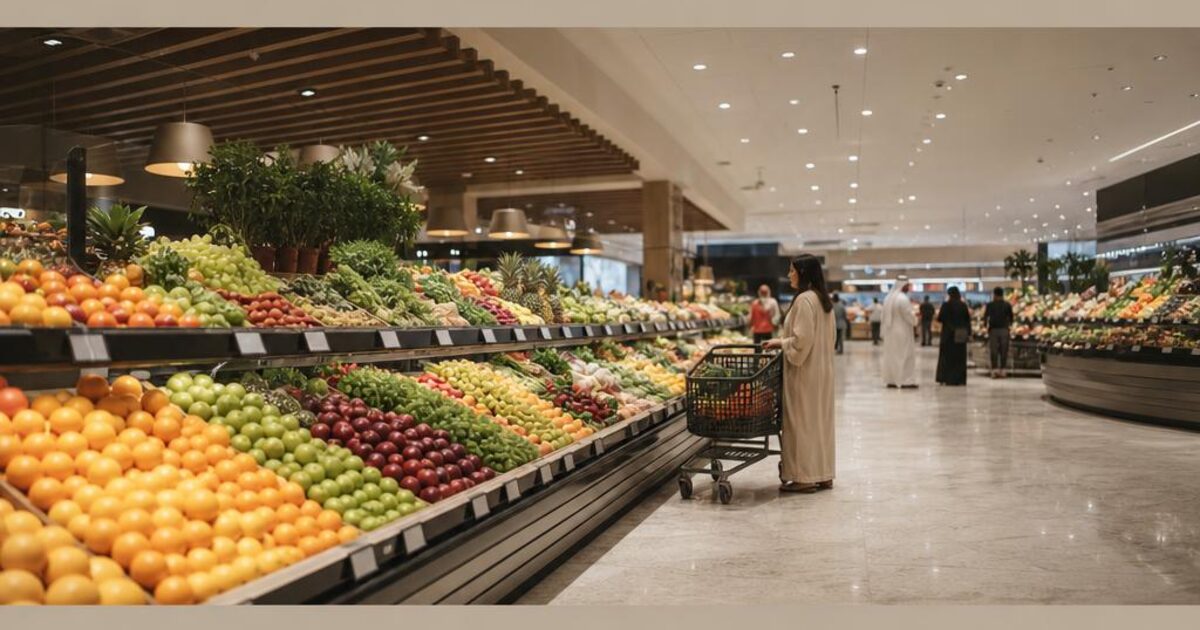
How MENA Grocery Retailers Win with Competitive Price Intelligence
Grocery is the fastest-growing and most price-sensitive category in MENA e-commerce. Here is how the retailers gaining market share are using competitive price intelligence to stay ahead.
The Grocery Opportunity in MENA
Online grocery in the MENA region grew at 34% compound annual growth rate between 2022 and 2025, driven by delivery infrastructure investment across UAE, Saudi Arabia, and Egypt, and by a permanent behavioural shift following the COVID-era adoption of online shopping for essentials. The category is now the primary battleground for basket share among major platform players.
Noon Daily, Carrefour Now, Talabat Market, and a growing number of quick-commerce entrants are competing aggressively on price for high-frequency staples — the everyday items that bring shoppers back weekly and anchor basket size. For grocery retailers without systematic price intelligence, this competition is invisible until the margin impact appears in quarterly results.
Why Grocery Pricing Is Uniquely Challenging
Grocery pricing is more complex than electronics or fashion for several structural reasons that make systematic competitive intelligence particularly valuable.
Update Frequency
Grocery prices — particularly in dairy, produce, and ambient dry goods — can change multiple times per day in response to supply availability, promotional cycling, and platform-level margin management. A snapshot taken once per day misses most of this movement. Retailers relying on daily or weekly monitoring are making ranging and promotional decisions based on a still image of a fast-moving market.
Product Complexity
Grocery SKU counts are high and variant proliferation is extreme. The same yoghurt brand may appear in 6 pack sizes, 3 fat percentages, and 4 flavours across the same platform, each priced independently and promoted on different cycles. Matching these accurately across platforms requires the kind of attribute normalisation that general matching approaches struggle with.
Promotion Depth and Frequency
Grocery platforms use deep, short-duration promotions — buy-two-get-one deals, bundle discounts, loyalty-point multipliers — that do not appear as straightforward price changes. Monitoring systems that only track unit prices miss the effective price that a price-conscious shopper actually pays.
What Winning Retailers Monitor
The most effective grocery price intelligence programmes focus on three distinct data streams rather than simple price tracking.
Effective price tracking. Capturing the true price a shopper pays after all visible promotions, bundle mechanics, and loyalty discounts. This requires promotional data extraction alongside price data — not a common capability in basic monitoring tools.
Stock availability signals. When a competitor goes out of stock on a staple category SKU, there is a short window — typically 4–48 hours — when demand can be captured at full margin by a retailer who is in stock and has repriced to parity or slight premium. Availability monitoring turns competitor supply disruptions into revenue opportunities.
New entrant tracking. Quick-commerce platforms continue entering MENA markets, often with aggressive introductory pricing on staples. First-mover detection of new competitors on monitored categories allows ranging and promotional responses before significant basket share is lost.
The Margin Maths
A mid-sized MENA grocery retailer running 8,000 monitored SKUs across 12 platforms, with automated repricing enabled on the 500 highest-velocity items, typically sees the following outcomes within 90 days of deployment:
- 3–5% reduction in unnecessary above-market pricing on monitored staples, recovering basket share without margin sacrifice on the majority of SKUs
- 8–12% improvement in margin capture on SKUs where stock availability signals enabled full-price selling during competitor OOS events
- 15–20% reduction in time-to-respond to competitor promotional launches, from a previous average of 36+ hours to under 4 hours
In a category where operating margins are thin and basket-level economics are driven by frequency of visit, these improvements compound materially over a 12-month cycle.
Where to Start
For grocery retailers beginning a price intelligence programme, the highest-ROI starting point is not the broadest coverage — it is depth on the right categories. Identify the 50–100 SKUs that drive the highest repeat purchase frequency and are most heavily cross-shopped against your primary competitors. Building systematic intelligence on that core basket first delivers measurable results within weeks and builds the internal confidence to extend coverage further.
GetRealPrice Editorial
Pricing intelligence insights from the GetRealPrice team — covering MENA e-commerce, competitive pricing strategy, and retail market analysis.
Ready to see GetRealPrice in action?
Join 250+ MENA brands and retailers using competitive pricing intelligence to stay competitive.